
Retro Re-release Roundup, week of April 9, 2026
An early WayForward genre-bender gets the deluxe treatment.
Skibidi Sigma Star Saga was right there, Wayf.
ARCADE ARCHIVES / ARCADE ARCHIVES 2
Polaris
- Platform: Nintendo Switch 2, PlayStation 5, Xbox Series S/X (worldwide, ACA2) / Nintendo Switch, PlayStation 4 (worldwide, ACA)
- Price: $9.99 / €8.99 / £7.39 (ACA2), $7.99 / €6.99 / £6.29 (ACA), $2.99 / €2.99 / £2.49 (ACA-to-ACA2 upgrade)
- Publisher: Hamster / Taito
What's this? Afixed-screen shooting game with a naval theme, originally developed and distributed in arcades by Taito in 1980, with home conversions produced for Atari 2600 and Commodore Vic-20 and a single emulated reissue via the Japan-only Taito Memories II Volume 2 compilation for PlayStation 2; players are given control of a Polaris-class submarine which is capable of moving through the ocean and firing upwards at the enemies attacking from the surface or above the water, with their shots able to take out enemies and most enemy attacks.
Why should I care? You're interested in trying one of the few Japanese-made post-Invaders games whose fanbase, such as it is, is overwhelmingly non-Japanese — for whatever reason, this game was extremely scarce in its homeland.
Helpful tip: Online resources on this game have long been split on whether this game was designed for 4-way or 8-way joystick, and this Arcade Archives reissue provides a definitive conclusion to that argument: the initial version used a 4-way, the later revision used an 8-way.
CONSOLE ARCHIVES
Seicross (Famicom)
- Platform: Nintendo Switch 2, PlayStation 5 (worldwide)
- Price: $7.99 / €6.99 / £6.29 (ACA2)
- Publisher: Hamster / Nichibutsu
What's this? The home conversion of Nichibutsu's 1984 arcade speeder-bike shooting game Seicross (Sector Zone in Japan), originally released for both Famicom and NES in 1986; alternating between faster- and slower-scrolling stages, players are tasked with shooting enemies, ramming rival riders and grabbing rescuees on their way to the goal, all while balancing the tradeoff between the bonuses conferred by rescuing multiple people and the added strain placed on one's energy gauge.
Why should I care? Strange and seemingly broken handling, speedy horizontal scrolling on a vertically-oriented monitor and generally shoddy programming made the arcade original a bit of a chore, so this home version's valuable inasmuch as it offers a far more technically sound take on what is, ultimately, a fun little game. Then again, it's also missing the in-your-face parallax scrolling from the arcade version, so why even bother?
Useless fact: The Japanese reading of "Seicross" just happens to be identical to a certain Japanese slang term for sex, so any re-emergence of this version of the game is inevitably met with a million gags about its title.
EGG CONSOLE
Schwarzschild II: Teikoku no Haishin (PC98)
- Platform: Nintendo Switch (worldwide)
- Price: $7.16 / ¥880
- Publisher: D4 Enterprise / Kogado Studio
What's this? The first entry in Kogado Studio's signature epic sci-fi war simulator, originally released for PC-98 in 1989 and quickly ported to PC-88 and MSX2, with significantly reworked versions produced for both PC Engine CD and Sega Mega CD as Super Schwarzschild and Mega Schwarzschild, respectively;the core framework of galactic resource-building, alliance-building and large-scale turn-based space combat remains intact, now augmented with distinct combat and non-combat ship types, improved enemy CPU routines, more distinct and personality-laden faction leaders and more.
Why should I care? The Nobunaga's Ambition-meets-space-opera direction of the first game, as well as the slightly more guided, narrative-centric focus relative to other contemporaneous strategy sims, remains intact from the original, and they've added a few measures to make the game more enjoyable at both the beginner level (via a practice mode, and a semi-secret resource importer from the original game) and the higher end (via enemy behavior that's less prone to simply charging and/or fleeing). Those who've tried the console versions also might want to circle back for the original, as it might as well be a completely different game.
Language barrier? Absolutely: there's a lot of reasonably dense text that one won't be able to bluff past, nor would it be enjoyable to even try.
NINTENDO SWITCH ONLINE
April '26 update: Mendel Palace, Pac-Man & Tower of Druaga (NES/Famicom)
What're these: Three titles from Namco's stable: the late-era NES version of their eternal dot-eating arcade game, the floor-flipping action game and debut title from future Pokemon developers Game Freak (released in Japan as Quinty) and the Japan-only home version of the big-in-Japan, absent-elsewhere RPG-adjacent overhead action game known for the increasingly opaque clear conditions required to progress from floor to floor.
Why should I care? Mendel Palace offers the earliest possible demonstration of Game Freak's penchant for producing games whose enthusiasm and charm are able to carry game design that isn't quite all there, and if nothing else, one might be amused by Namco's newfound insistence that the extremely Japanese and extremely of-its-era-and-absolutely-no-other Druaga is actually a beloved global classic that requires no contextualization. As for Pac-Man, I figured it would require no introduction, but I'm learning that time has so progressed that there exists a not-insignificant number of people for whom the information that Pac-Man even has a NES port is news in and of itself, so allow me to say: yep, it's on NES, and it's perfectly fine.
Namco Museum Archives watch: All three of these games are one volume or the other, available on Switch, PlayStation 4, Xbox and/or PC: Pac-Man and Druaga are on Vol.1, and Mendel Palace is on Vol.2.
OTHER
- Platform: PlayStation 5, Nintendo Switch, PC via Steam (worldwide)
- Price: $19.99 or equivalent
- Publisher: WayForward Technologies / Limited Run Games
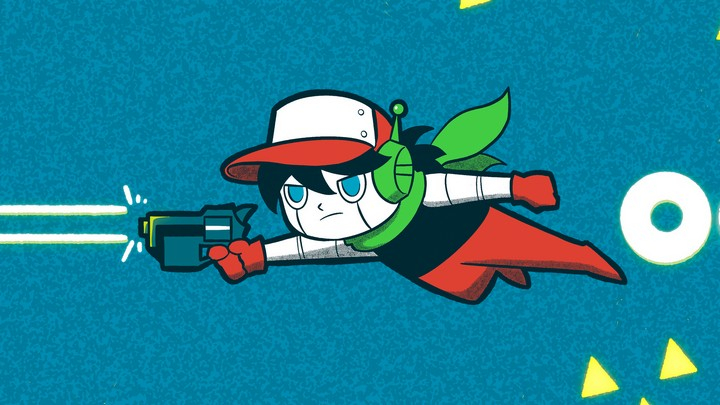
What's this? An emulated digital release of the recent "deluxe" revision of WayForward Technologies' 2005 sci-fi shooting game/adventure/RPG hybrid Sigma Star Saga, originally developed for Game Boy Advance and published by Namco in North America and Atari in Europe and recently reissued on cartridge in deluxe form via Limited Run Games; in addition to the enhancements provided by Limited Run Games' "Carbon Engine" emulator frontend, which include save states, rewind, screen filters and art and music galleries, this version offers many tweaks to the original game which include reduced enemy encounter rate, increased experience game, a revised map, collision and ship speed adjustments, autofire and much more.
Why should I care? Despite all of WayForward's attempts to sand off this game's incredibly jagged edges, Sigma Star Saga ultimately remains a relic of a very specific era in which scrappy little games that proudly flew the 2D flag and wore their cult-classic NES influences on their sleeves were celebrated irrespective of their actual quality — that is to say, their riff on The Guardian Legend's shooter-meets-Zelda format isn't an especially well-crafted action-adventure, shooting game or RPG and each element is almost specifically designed to irritate the other, but the quality of WayForward's pixel art (and their propensitiy for cheesecake female character design) has not diminished at all, and that's probably enough to carry anyone who endorses the general idea of the game, if not the act of playing it from moment to moment.
Helpful tip: This release is alleged to be built atop and unlicensed and unauthorised commercial implementation of the mGBA emulator, so you may want to steer clear until any legal/licensing issues are clarified or resolved.