
Retro Re-release Roundup, week of Early Onset Karnovember 20, 2026
DECO and non-DECO classics abound.
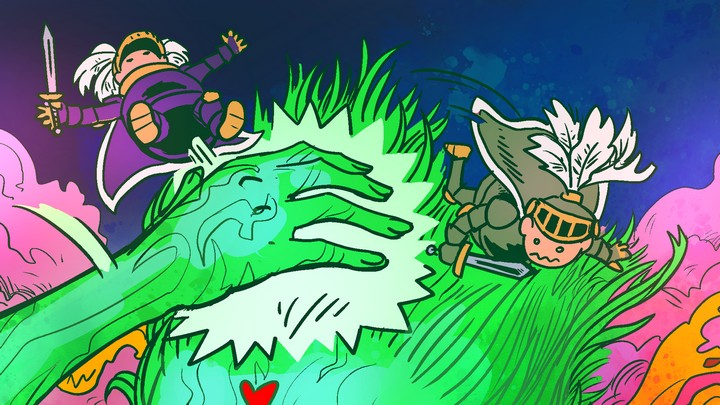
I trust that some things need not be explained... but, in the event that I'm wrong: he's fat and he collects K blocks and he grows angel wings sometimes, hope that helps.
ARCADE ARCHIVES / ARCADE ARCHIVES 2
Karnov
- Platform: Nintendo Switch 2, PlayStation 5, Xbox Series S/X (worldwide, ACA2) / Nintendo Switch, PlayStation 4 (worldwide, ACA)
- Price: $9.99 / €8.99 / £7.39 (ACA2), $7.99 / €6.99 / £6.29 (ACA), $2.99 / €2.99 / £2.49 (ACA-to-ACA2 upgrade)
- Publisher: Hamster / Paon-DP
What's this? A side-scrolling action game starring a flabby shirtless guy in sweatpants, originally developed and distributed in arcades by Data East in 1987 and adapted for numerous contemporary home platforms, including a Famicom/NES version published as part of the Namcot line in Japan, a variety of European microcomputers and a Tiger Electronics handheld LCD game, with this being the first console reissue of the authentic arcade version; players control the fire-breathing ruffian Karnov on a quest across a strange land to retrieve their stolen loot from a scheming sorcerer, which requires one to jump, spit fireballs at a menagerie of strange foes and collect and use a wide variety of items, which are stored and tracked at the bottom of the screen and selected via a cursor that automatically moves when the player taps left or right on the joystick.
Why should I care? You want to experience the origin story of Data East's peculiar mascot character, and to dispel any misinfo you may have heard about this being an awful game carried by weirdness: it is, in fact, a solidly constructed and reasonably fair game with just a little mechanical clunk, and one that barely even registers as quirky when compared with many of the Data East games that would immediately follow. (You might also choose to celebrate it as the first game from the catalog of Paon-DP, one of the many individual successors to the Data East library whose modest selection of games include Karnov, Chelnov/Atomic Runner, Wolf Fang, Vapor Trail, Sky Fang and Windjammers, as well as the Heracles no Eikou RPG series for home consoles.)
Useless fact: Aside from his many cameos across various Data East games, Karnov makes an unofficial, in-all-but-name appearance in WayForward's Shantae and the Pirate's Curse as a nameless, silhouetted figure who is also implied to possibly be her long-lost father.
CONSOLE ARCHIVES
Nobunaga's Ambition II (NES/Famicom)
- Platform: Nintendo Switch 2, PlayStation 5 (worldwide)
- Price: $7.99 / €6.99 / £6.29
- Publisher: Hamster / Koei-Tecmo
What's this? The second Nintendo-based adaptation of Koei's seminal historical grand strategy series Nobunaga no Yabou, originally released for Famicom in 1989 and ultimately localised for NES in North America in 1991; this version maintains the core tenets of the original — turn-based military conquest, economic/resource management and diplomacy — and enhances it with more detailed audiovisuals, new subsystems like the ability to subordinate and be succeeded by generals and the repositioning of certain historical re-enactments, which were essentially hidden bonus content in the previous game, as core content.
Why should I care? There's an English version of this one!
Useless fact: This is another Koei game that a) has a zillion different versions, b) showed up in one of the many archival Koei anniversary packs released to Steam almost a decade ago, and c) is specifically represented on Steam via an approximation of the FM Towns version, of all versions.
EGG CONSOLE
Sabnack (PC-98)
- Platform: Nintendo Switch (worldwide)
- Price: $7.19 / ¥880
- Publisher: D4 Enterprise / Kogado Studio
What's this? A fantasy-themed overhead puzzle-action game, originally developed and distributed for both PC-98 and Sharp X68000 by Kogado Studio in 1991. Set in a world cursed by the evil Sabnack, the player must use their magic cloak to unpetrify the various fairies and warriors that can be found in each stage and bring them to the magic seals located at specific points on each map; the unpetrified characters will move in step with the player-character, relative to their position when unpetrified, and colliding them with enemies and/or environmental obstacles might cause them to be repetrified or otherwise difficult to manipulate, so precise and considered movement through each map is key to success.
Why should I care? You, like so many others, just kinda presumed this was an RPG.
Language barrier? As far as I'm aware, there is virtually no text aside from the occasional story scroll.
NINTENDO SWITCH ONLINE EXPANSION PASS
August '26 update: Star Fox Adventures (GameCube)
What're these? The first-ever reissue of the Rare-developed, Nintendo-published action-adventure game Star Fox Adventures, originally published in 2002 and never ported or remade until now; players guide Fox McCloud on a boots-on-the-ground expedition to restore and rescue the fractured Dinosaur Planet and its inhabitants from the menace of the dictator General Scales, which plays out via an assortment of puzzle-lite dungeons, various fetch quests, hand-to-hand staff combat, the occasional minigame-esque setpiece and, every so often, Arwing-based rail shooter sections that almost feel like something from a traditional Star Fox game.
Why should I care? This game was quite famously a reskinned and retooled version of an original action-adventure game in development for Nintendo 64, and I suspect that anyone who chooses to approach it not as a Star Fox game but as the capstone to a certain era of Rare games, and one that's pulling in the Legend of Zelda direction rather than merely pulling Zelda-isms into other formats, will enjoy the portions of the game that Rare were able to finish before selling to Microsoft. You might also enjoy the fox girl and the horny saxophone theme that plays whenever she walks into a cutscene, perhaps.
Helpful tip: This game originally offered 16:9 widescreen support back on GameCube, meaning you can play it on NSO without the scren borders that so many people seem unable to abide.
OTHER
Crisis Core: ~Final Fantasy VII~ Reunion
- Platform: Nintendo Switch 2 (worldwide)
- Price: $49.99 or equivalent (standard) / $69.99 or equivalent (deluxe)
- Publisher:Square-Enix
What's this? A surprise Switch 2 port of 2022's overhaul of the Final Fantasy VII action-RPG prequel Crisis Core, originally developed and published for PlayStation Portable by Square-Enix in 2007; this TOSE-produced redux offers new high-definition character models, full English and Japanese voice acting by most of the cast from Final Fantasy VII Remake, newly-arranged audio and sweeping changes to the original combat that bring it closer to something resembling that of FFVII Remake. (To my knowledge, this port's extremely similar to the existing Switch port, save for a 60FPS performance option. Also, the digital deluxe version adds an artbook and mini-soundtrack,)
Why should I care? You want to finally catch up on all the relevant backstory before the impending drop of the final FFVII Remake installment, and you want to do so with a version that plays like something resembling a conventional modern RPG and not the odd turn-based-sorta-Kingdom Hearts thing the PSP original was going for — this "remaster" is virtually a new game wearing the skin of the old one.
Upgrade path? No upgrade, no discount, nothin'. (PS4 owners got a free PS5 upgrade, just sayin'.)
Gakkou de Atta Kowai Hanashi to Tsukikomori
- Platform: Nintendo Switch (Japan)
- Price: ¥2970 (individual digital games) / ¥6578 (physical two-pack) / ¥10978 (limited edition physical; 2 variants)
- Publisher:D3 Publisher / Mebius
What're these? Reissues of he original Super Famicom versions of the school-based ghost-story sound novel anthology Gakkou de Atta Kowai Hanashi ("Gakkoukawa") and its non-school-based successor Tsukikomori, originally developed by Pandora's Box (the home of acclaimed RPG designer Takeo Iijima) and published by Banpresto for Super Famicom in 1995 and 1996, respectively, and followed by various official and unofficial sequels on consoles and PC; these versions are emulated by Mebius and offer some basic enhancements including that include save states, rewind and a game speed setting. (Each of the deluxe limited edition options contains the same game software, packaged with a different soundtrack set and new tie-in novel written by Iijima.)
Why should I care? The sound novel boom kicked off by Chunsoft's Otogirisou and Kamaitachi no Yoru spawned a lot of unexciting imitators, but these particular games stood out and hold up through a mix of plainly well-written narrative, the not-as-silly-as-it-could-be adoption of digitized visuals and character portraits and some clever augmentations to the novel format that make it less passive, more interactive and more conducive to replays and experimenting to find all the branches, without deviating back into more conventional adventure game territory — honestly, they deserve better than these reissues, which are one step above a ROM dump (and are not translated, in case that needs pointing out), but at least they're back in circulation.
Useless fact: Just today, D3 announced plans to reissue more games from Takeo Iijima's oeuvre: namely, the five Game Boy and two Super Famicom entries in the Iijima-penned/designed RPG series ONI, which will be receiving dual collections next year; incidentally, iijima's working on a brand-new ONI game for the first time in decades, too.
Jaleco Sports: Faceoffs
- Platform: PlayStation 5, Nintendo Switch (worldwide)
- Price: $9.99 or equivalent
- Publisher:Rock-It Games / Sickhead Games
What're these? A fifth collection of emulated NES & SNES sports games from the Jaleco catalog; this collection offers eight(ish) odds and ends spanning hockey, basketball and soccer, with features that include save states, rewind, basic screen filters, online leaderboards, viewable manuals and virtual packages and more.
Which games are included? This collection includes the NES tennis game Racket Attack (and its Famicom equivalent, Moero!! Pro Tennis), the NES basketball game Hoops and its Famicom equivalent, Moero!! Junior Basket Two on Two, and both the NES and SNES versions of the hocket game Pro Sport Hockey, as well as their Famicom and Super Famicom equivalents, USA Ice Hockey.
Why should I care? To my recollection, Hoops was a perfectly adequate Double Dribble clone, but beyond all else, this collection's true value might be in highlighting just how desperate Jaleco were to recapture the success of Moero!! Pro Yakyuu (Bases Loaded) in Japan by simply slapping Moero!! onto anything sports-related.
Helpful(?) tip: The emulation seen in prior collections has never been great, but I've heard this release is exceedingly poor, so proceed with caution.
Dragon Quest Heroes: Torneko's Mystery Dungeon -Classic HD-
- Platform: PlayStation 5, Nintendo Switch 2, Nintendo Switch, Xbox, PC via Steam, iOS, Android (worldwide)
- Price: $24.99 or equivalent
- Publisher: Square-Enix
What's this? A high-definition makeover of the 1993 Super Famicom Dragon Quest IV-adjacent roguelike Torneko no Daibouken, originally developed by Chunsoft as the first entry in their long-running Fushigi no Dungeon/Mystery Dungeon series and never reissued until now; in addition to bringing the game to global audiences for the first time, this new version offers polygonal environments behind classic pixel art, widescreen support and some basic additional UI and difficulty settings, as well as a PC-exclusive "streaming dungeon" that hooks into streaming platforms and allows the audience to influence what happens in-game via chat.
Why should I care? Let's start with the positives: this release doubles as a celebration of an important milestone for not only Dragon Quest and for Chunsoft but for the advancement and proliferation of the classic roguelike format, and returning to this very first, pre-Shiren Mystery Dungeon game allows one to examine just how carefully Chunsoft wielded the precepts of Dragon Quest in order to communicate the essentials of the roguelike experience to a mass audience. The unfortunate downside is that this remaster is burdened with a slapdash UI and a litany of input, lag and performance issues that culminate in a significantly worse "quality-of-life" experience than the original SFC version, and those aren't issues that a game this basic can really afford to shoulder. (I also tend to think it's the most hideous classic makeovers S-E's dished out in quite a while, but you make up your own mind.)
Upgrade path? As far as I'm aware: no Switch/Switch 2 upgrade path, no discount, no cross-save.
Touhou Koumakyou: New Classic - Embodiment of Scarlet Devil
- Platform: PlayStation 5, Nintendo Switch 2, Nintendo Switch, PC via Steam (worldwide)
- Price: $17.99 or equivalent
- Publisher: Shanghai Alice Reprise
What's this? A remaster of the sixth entry in the massively influential, copyright-transcending Touhou series, originally developed for Windows PC by solo doujin dev ZUN in 2002 and never released globally, nor on other platforms, until now; produced by ZUN and a handful of doujin dev colleagues, the "New Classic" version recreates the original danmaku shooting game with new high-definition visual assets, a new, optional ZUN-arranged sountrack, some small design changes like a visible hitbox and an infinite lives mode and multi-language support, whereas the included "Classic" version looks to faithfully recreate the original game as exactly as possible on modern hardware/OS, save for some creature comforts like the ability to play with WASD on keyboard rather than the arrow keys. (The two modes are distributed as distinct builds; despite what your storefront of choice might imply, all versions of New Classic are bundled with Classic, and there is no way to buy Classic on its own.)
Why should I care? Putting aside EoSD's legacy as the pioneer of a style of bullet hell that's largely distinct and arguably more influential than the more critically-recognized arcade effors of companies like Cave, this is the game that codified the format of traditional ZUN-made Touhou games, snowballed from "doujin hit" to "culture-moving monolith" and, now, represents the first opportunity for most of the world to buy and play an officially-produced, officially-localized and officially-sold mainline Touhou game in their region on their platform of choice — simply put, this is perhaps the most essential and/or historically significant entry in a series that is, without hyperbole, the most influential independent Japanese game series of all time, and this release has been a long time coming.
Useless fact: The Classic version is so accurate to the original 2002 version that PC players can carry over their old saves and replays.